I、 Axle and Welding Process
1.1 Type and Function of Axles
The vehicle axle (also known as the vehicle axle) is connected to the frame (or the load-bearing body) through the suspension, wheels mounted at both ends. The role of the axle is to withstand the load of the vehicle and maintain the normal running of the vehicle on the road. The axle is one of the key components of the vehicle, and bears complicated force. It not only bears and transmits force, but also bears the bending moment and torque generated by the huge dynamic load and static load. For this reason, the axle is required to have sufficient strength, rigidity and tenacity. Among the many welds in the axle, the girth welding of the axle housing and the axle tube is the key, which is directly related to the driving safety of the vehicle and the personal safety of the passenger and the driver. Therefore, it is important to ensure welding quality.
According to the function of use, there are four types of axles: drive axle, steering axle, steering drive axle and support bridge, as shown in Fig. 1. The function of the drive axle is to transmit the driving force transmitted from the engine to the driving wheel, thereby achieving the effect of slowing down and increasing the torque, and changing the direction of power transmission at the same time. The steering axle uses the swing of the steering knuckle to deflect the wheel by a certain angle to achieve steering of the vehicle while bearing the vertical load between the wheel and the frame. The steering drive axle has both steering and drive functions. It has the basic components of a general drive axle, and also has a kingpin unique to the steering axle. The support axle is a driven axle, that is, an axle with no steering or drive function.
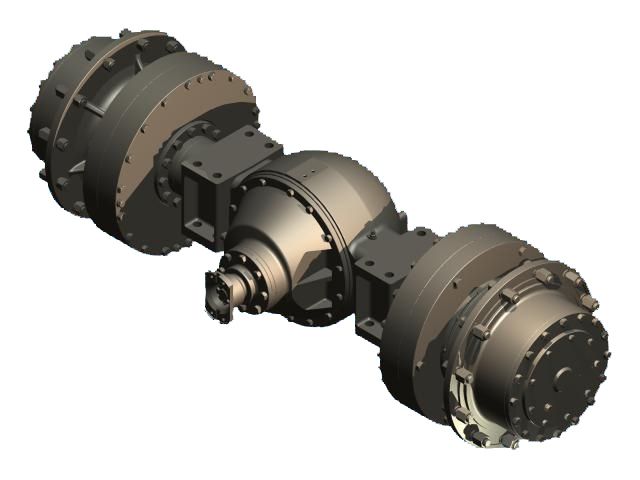
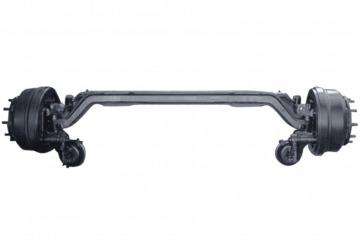
a. Drive axle b. Steering axle b. Steering axle
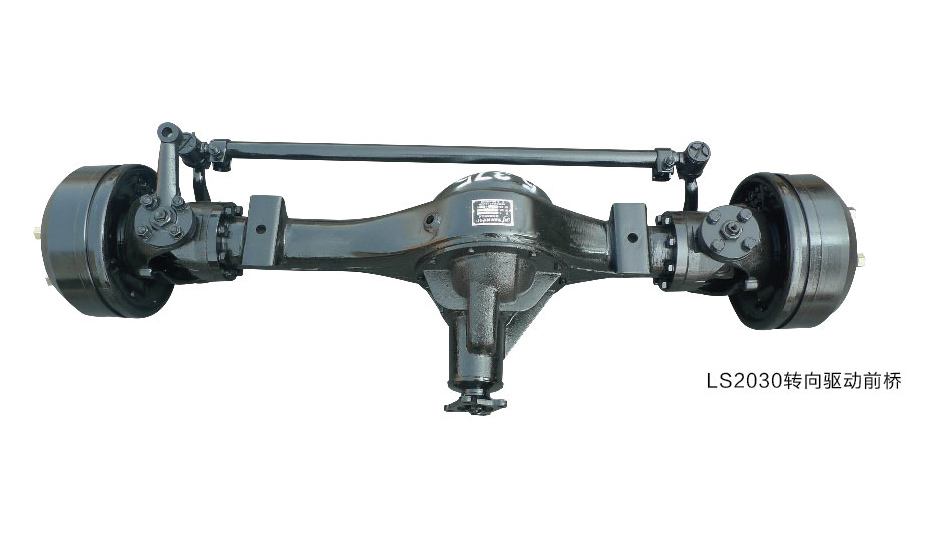
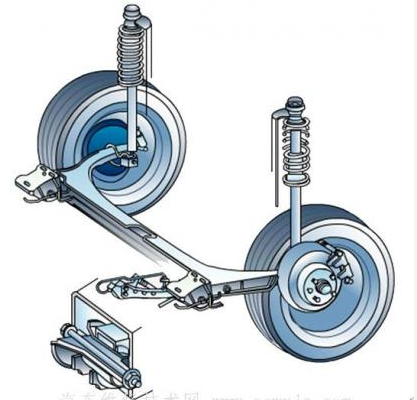
c. Steering drive axle d. Support axle
Fig. 1 Vehicle axle classification
1.2 Axle welding process flow
The drive axle is one of the key components of the vehicle, and the welding quality is related to the safety of the vehicle. It not only has to bear and transmit force, but also bears the large bending moment and torque caused by dynamic load and static load. For this reason, the rear axle has sufficient strength, rigidity and tenacity, which raises high requirements for the welding quality of the rear axle. The rear axle of the vehicle is welded by a half-axle housing, a fixed disk, a back cover, a flange, an axle tube and miscellaneous parts, as shown in Fig. 2. The welding process is as follows:
Fig. 2 Automobile drive axle components
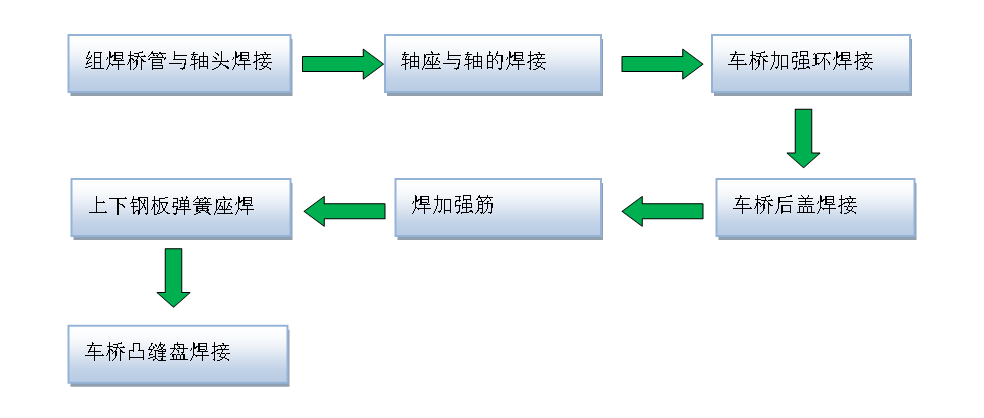
II、 Welding process of bridge tube and axle head group welding
2.1 Component process requirements
Among numerous welds in the axle housing, the two ring welds of the deformed axle tube and the axle housing are particularly critical. They are integrated with the drive axle housing to fix the relative axial position of the left and right drive wheels, and together support the quality of the frame and each assembly on it. Meanwhile, they carry the road reaction and torque transmitted by the wheel when the automobile runs and transmit to the frame through the suspension. The horizontal pneumatic clamping tooling is used. After the axle head and the bridge tube are clamped, the center should have no tilts; the weld should be free of defects such as incomplete fusion, cracks and pores to meet the requirements of penetration depth and fatigue toughness.
2.2 Solution
1) Base material texture and groove shape
Today, the materials used in automobile axles are mostly the low carbon steel series, especially Steel 20, which has a lower content of C and other alloying elements that can improve the hardening ability, a less quench hardening phase, a smaller cold cracking tendency, and a better welding property.
The thickness of the axle tube is about 7-15 mm, and the butt weld groove adopts a narrow gap groove shape to reduce the loading degree of the weld metal and improve the grain size and welding efficiency of the weld structure. The groove form is shown in Fig. 3. The β angle is around 3 degrees and R is about 8 mm.
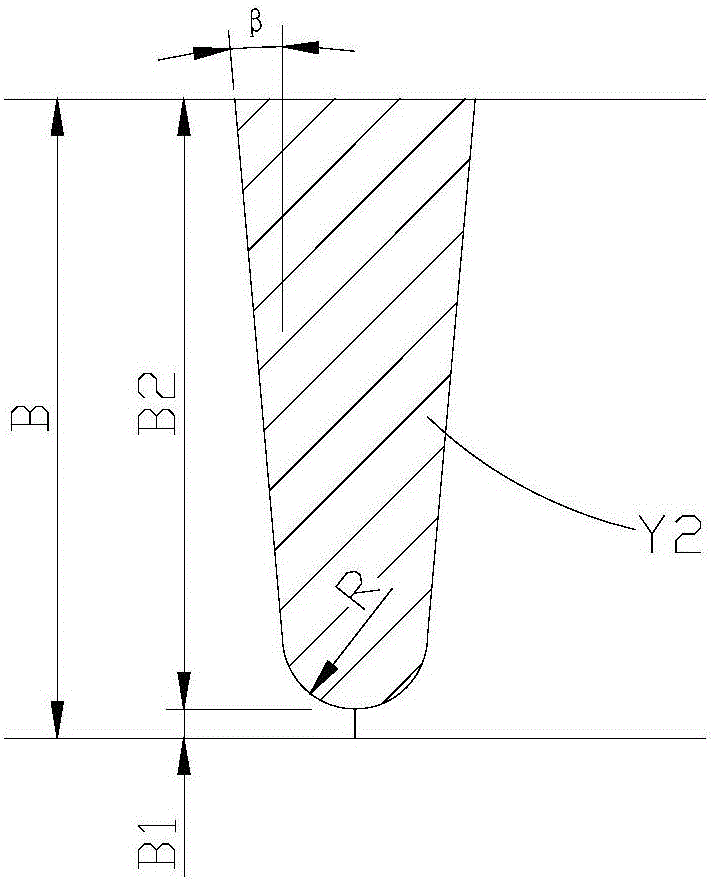
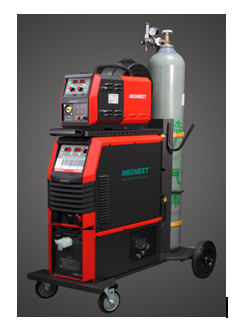
Fig. 3 Weld groove shape Fig. 4 Artsen PM series welder
2) Use the MEGMEET Artsen PM 500F digital welding inverter and circular seam welder.
The Artsen PM series welder is a full digital IGBT inversion CO2/MAG/MIG multi-function welding power supply designed for professional users. The parameters of pulse welding at of each stage allow a fine adjustment according to different working conditions to obtain better welding quality and high-speed full digital control, and allows to monitor every stage of the droplet transfer to accurately achieve "one pulse-one droplet ", so that a welding that is stable and almost spatter-free can be realized. The welder is shown in Fig. 4.
Automatic welding equipment for axle head double circumferential weld, with two welding torches installed and welding simultaneously. PLC control, automatic swing, lifting and tracking functions. With automatic clamping function to ensure the workpiece mounting dimension. The picture of special machine is shown in Fig. 4.
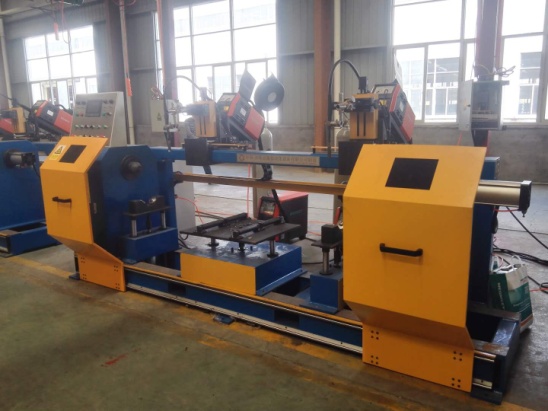
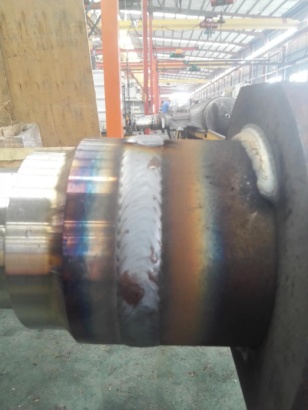
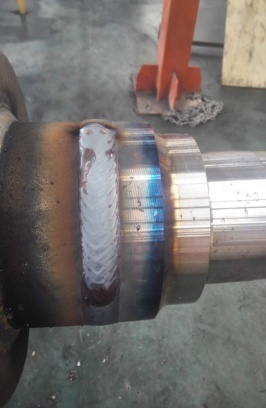
Fig. 5 Automatic special welder for axle head double circumferential weld
Product welding process parameters: The number of welding layer is 3, current range is 240-270A, voltage is 25-28V, welding speed is 0.5M/Min, wire diameter is 1.2, protective gas is 80% of argon and 20% of carbon dioxide, and the wire type is ER50-6. The picture of weld is shown in Fig. 6.
2.3 Effect comparison
The MEGMEET Artsen PM series of welder can cooperate with robots and special machines to achieve welding control through analog or digital these two communication modes. Meeting their automation requirements. There are no splash particles on the surface and periphery of weld, thus there is no need to clean the workpiece surface after welding. Weld flaw detection, with a qualification rate of 99%. Fatigue toughness meets customer requirements.
III、 Welding process of axle seat and axle
3.1 Process requirements
Weld height is 8mm; The welds are uniform without cracks, pores, slag inclusions, undercuts, etc.; Preheating temperature is 150—200°C; Penetration is greater than 0.5mm, weld Rockwell hardness is less than 78HB, and the Rockwell hardness of heat affected zone is less than 83HB. Welding process quality parameters: Current is 260—300, voltage is 28—31, wire diameter is 1.2, material is ER70S—6, 80% of argon and 20% of carbon dioxide mixed gas, gas flow is 18—25L/Min, DC reverse polarity, and dry elongation is 15—20mm. The workpiece welding position is shown in Fig. 7.
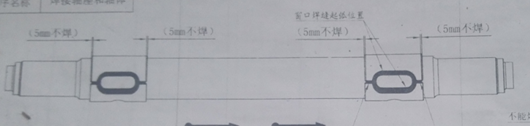
Fig. 7 Axle seat and axle welding position diagram
3.2 Solutions
The welder used by customer was a thyristor welder and the current type was DC. When the current was 260, the splash was large, with large particles of splash on workpiece surface, which is required to be cleaned after welding. The MEGMEETArtsen PM 500F welder is now used to achieve the splash-free welding in the process of welding with a pulse mode. The field welding diagram is shown in Fig. 8.
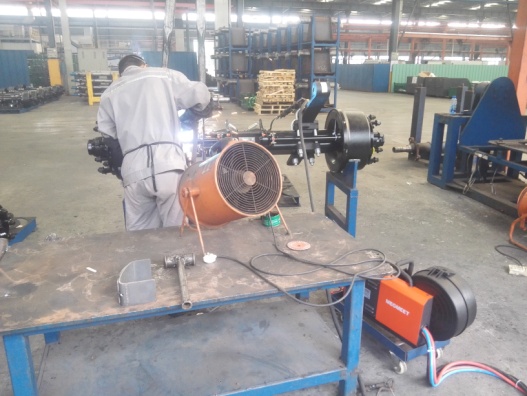
Fig. 8 Axle seat and axle welding site
3.3 Comparison of effects
Compared with the previous DC welder, the amount of spatter is reduced by more than 80%, and the overall welding efficiency is increased by 30%. Reduce the labor intensity of polishing. The qualification rate of welding seam is above 98%.
IV、 Welding of axle stiffening ring and axle housing cover
4.1 Process requirements
Among numerous welds in the axle housing, the two ring welds of the deformed axle tube and the axle housing are particularly critical. They are integrated with the drive axle housing to fix the relative axial position of the left and right drive wheels, and together support the quality of the frame and each assembly on it. Meanwhile, they carry the road reaction and torque transmitted by the wheel when the automobile runs and transmit to the frame through the suspension. The horizontal pneumatic clamping tooling is used. After the axle head and the bridge tube are clamped, the center should have no tilts; the weld should be free of defects such as incomplete fusion, cracks and pores to meet the requirements of penetration depth and fatigue toughness.
4.2 Solution
For the welding operation of the axle housing, the back cover of the axle housing is first fixed by spot welding, and then the rear cover of the axle housing is rotated by the positioner, the positioner is inclined by 45 degrees, and the welding torch is centered. As analyzed from the process, the main defects arise from the following: 1) the welding parameters are unreasonable, the current or voltage is too low, resulting in incomplete fusion or insufficient penetration; 2) the welding speed is too fast, the heat input is too small, resulting in incomplete fusion or insufficient penetration; 3) The cover of the axle housing is not coaxial with the intermediate positioning hole after assembly of the axle housing cover, which causes the welding torch to deviate from the weld seam, resulting in incomplete fusion or insufficient penetration at one side. The welding of the axle housing cover is shown in Fig. 9.
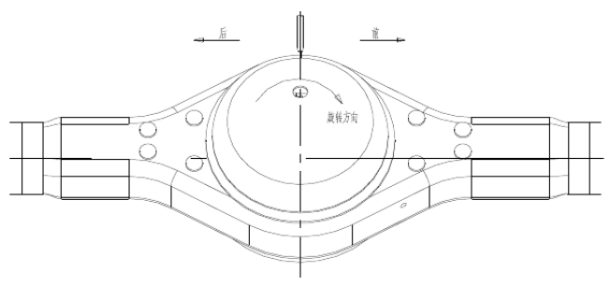
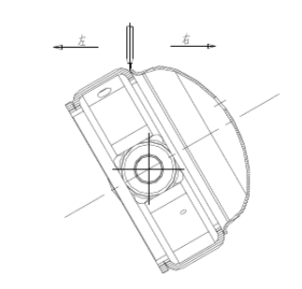
Fig.9 Diagram of welding of the axle housing
According to the customer's process requirements, the Megmeet Artsen CM 500 DC welder shall be adopted for the weld seam. This series of products is equipped with a control process of "special energy controlled short circuit transfer”, which improves the weld formation, increases the welding speed and reduces the welding spatter by controlling the welding current and voltage in real time, adjusting the metal transfer characteristics and molten droplet shape.
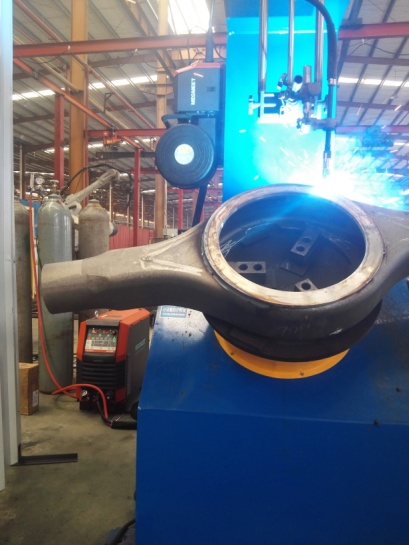
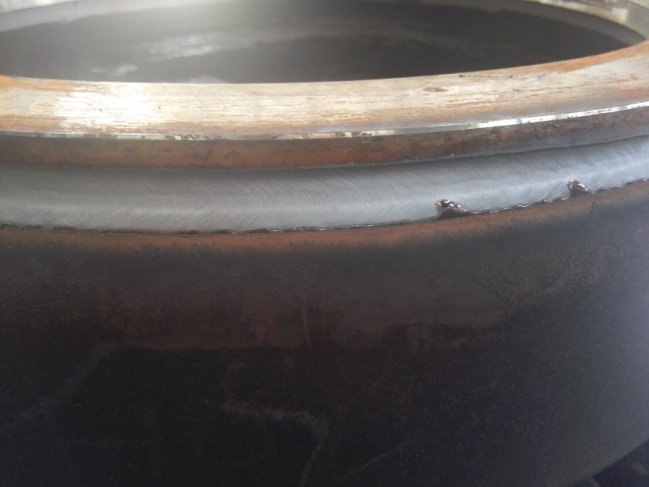
Fig.10 Photo of axle housing welding at customer site
The welding process is: welding current 300—320, voltage 29—32, wire diameter 1.2, material is ER70S—6, 80% argon and 20% carbon dioxide mixed, gas flow rate 18—25L/Min, direct current electrode positive, dry extension 15—20mm, welding speed 420mm/min.
4.3 Effect comparison
The Artsen CM 500 welder provides more stable output of welding current and voltage than ordinary welders, and the stability and anti-interference of the arc are better. In the process of welding medium and heavy plates of carbon steel, it can realize the low splash and deep weld penetration. It can be matched with a robot or special machine. The qualified rate of products is more than 99%.
V、 Axle convex joint disk welding
5.1 Process requirements
The two fixed rings and four ring fillet welds on the axle are in arc welding at the same time. The welding depth is required to be more than 2mm, the size of the welding foot is greater than 10mm, with the smooth welding seam. There is no defects such as undercut, crack, air holes and incomplete penetration. The automatic welding of the fixed ring is adopted with Artsen Plus 500P series welder and 4-gun simultaneous welding equipment. It has the functions of quick response to be in place and automatic adjustment. This special machine is shown in Fig. 11.
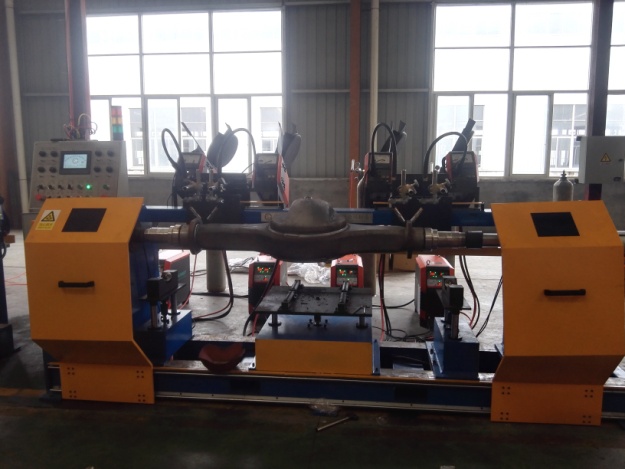
Fig. 11 4-gun welding equipment of circular seam
5.2 Solution
MEGMEET Artsen Plus series welders have high arc stiffness, good directivity, stable welding arc and the capacity of resisting disturbance
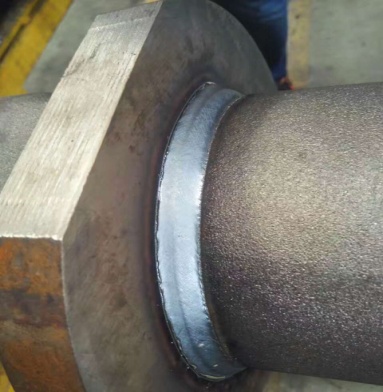
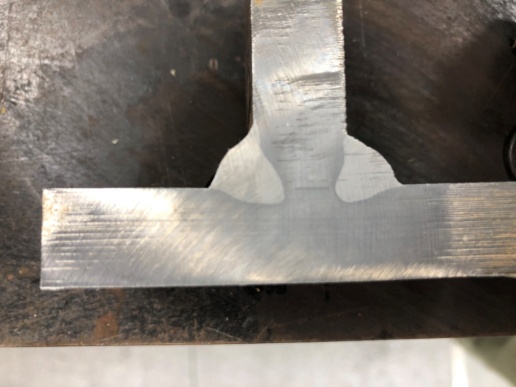
Fig. 12 Weld seam shaping and the depth of weld penetration
Strong strength and other characteristics;It can realize multi-gun simultaneous welding, and solve the interference problem of multi-gun simultaneous welding in the past. When the arc pressure is increased, the depth of welding penetration is greater than that of ordinary pulse. The weld seam shaping and the depth of weld penetration shown in Fig. 12. This series power supply also has the characteristics of uniform droplet size, short and stable arc length, low disturbance of molten pool and low probability of air holes. In Fig. 13, the difference between this arc and an ordinary arc is compared. In addition, the series power supply significantly reduces the loss of butt welding connecting external parts, extending the service life of the conductive nozzle from once a day to once every 3 days. The frequency of nozzle cleaning has been increased from once every half day to once every 2 days.
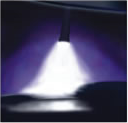
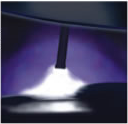
a.Normal pulse b.Short arc pulse
Fig. 13 Comparison of short arc pulse and normal pulse of Artsen Plus welder
5.3 Effect comparison
The four-gun special machine system is equipped with MEGMEET Artsen Plus welder, which not only solves the problem of multi-gun interference, but also improves the production efficiency for customers and reduces the loss of quick-wear parts. The loss of articles such as conductive tubes and nozzles is reduced by 3 to 4 times,and the pass rate of weld seam is almost 100%.
VI、 Summary
Using the MEGMEET Artsen welder and welding equipment mentioned above can increase the production volume of automotive rear axle and greatly improve the welding quality. It not only improves the working environment of workers, and reduces the labor intensity of workers, save energy and reduce material consumption and production cost. Focusing on constantly meeting and exceeding customer expectations, MEGMEET has been increasing the investment in research and development and continuous innovation, so as to provide customers with perfect technology and products and the best solutions.